AI customer service is no longer just a tool to reduce repetitive tasks; it has become a core driver for capturing leads across platforms and boosting conversion rates. Research shows that implementing AI in customer support can increase customer satisfaction by approximately 15% (IBM) and reduce cost per contact by up to 50% (McKinsey). Embracing an "AI-First" philosophy, as the AI-enabled platform for conversational engagement, Crescendo Lab has also proven that AI support tools can seamlessly resolve up to 70% of routine customer inquiries, significantly lightening the workload for human agents.
AI customer service bots don't just collaborate flexibly with human agents; they act as the ultimate assistant for your marketing and sales teams. This comprehensive guide will walk you through common customer support scenarios and pain points, showcasing real-world applications of AI customer service. To achieve this, you need to unify your data, sync your systems, and engage customers on the channels they use most. By combining Crescendo Lab's CAAC customer service platform and the AI Agent ecosystem, you can bridge the gap between your customer data and messaging channels, delivering context-aware experiences across marketing, sales, and service, ultimately transforming your support department from a defensive cost center into an offensive, revenue-generating powerhouse.
What is AI Customer Service?
AI Customer Service is a specialized branch of artificial intelligence that leverages advanced technologies like Large Language Models (LLMs) to automate and personalize interactions between brands and customers. Unlike basic automation, AI customer service solutions can genuinely understand "intent" and "sentiment," delivering professional and human-like responses across all digital touchpoints.
The current industry buzzword, AI Agent, is increasingly taking the spotlight in customer support scenarios:
Traditional Chatbot vs. AI Agent
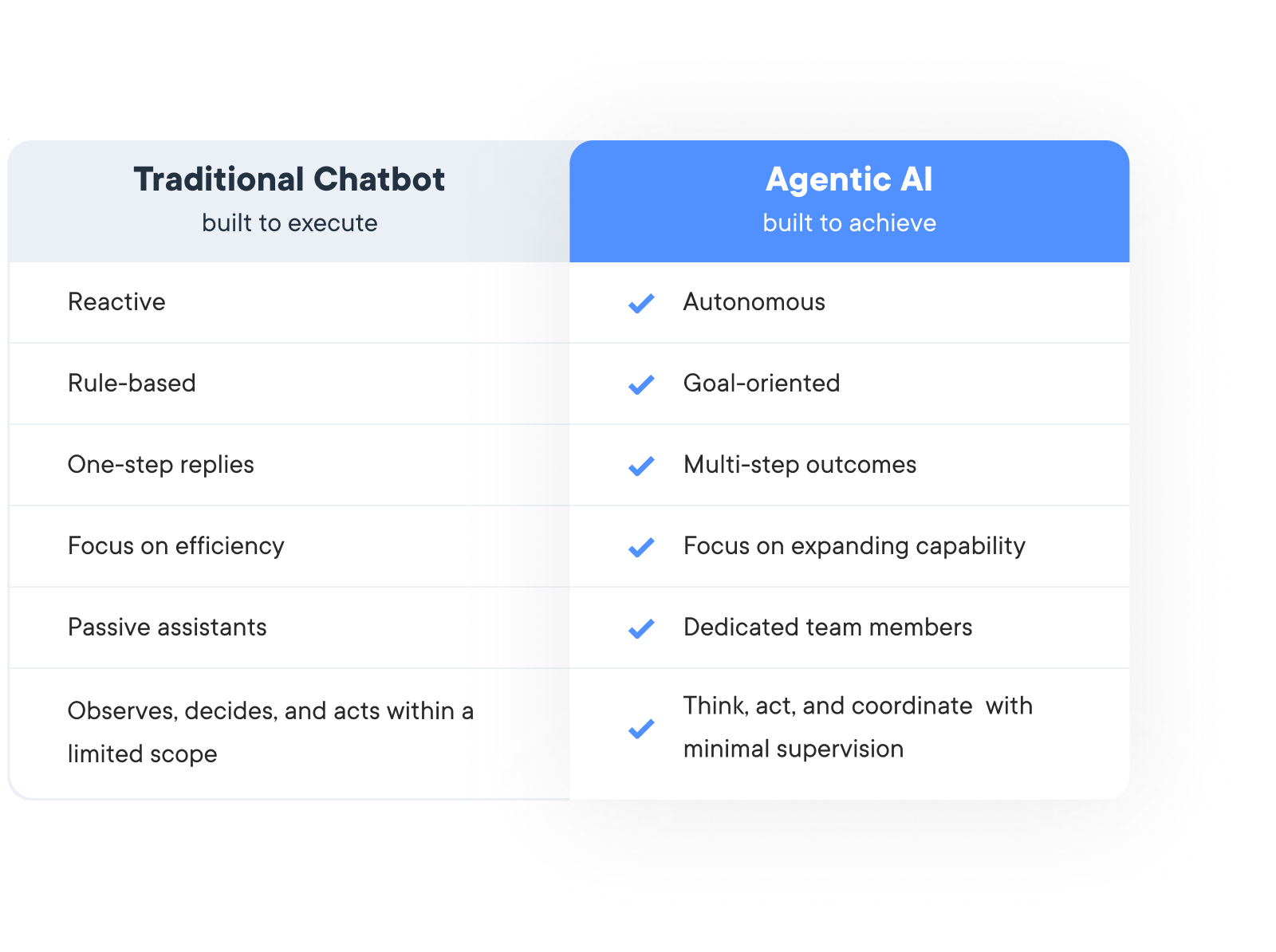
Traditional chatbots typically rely on rigid, "rule-based scripts." They act like a basic self-service kiosk—if the customer doesn't click the exact right button, the bot gets stuck in an endless loop. In contrast, modern AI Agents act more like "digital employees," upgrading the customer experience through several core capabilities:
- From "Passive Triggers" to "Autonomous Operation"
Traditional bots can only answer single, predefined questions. The latest AI Agents can autonomously guide the direction of a conversation. For example: If a B2B prospect asks for enterprise solution pricing via WhatsApp, the AI Agent won't just drop a generic PDF. Instead, it will proactively ask for details like company size and specific requirements, automatically syncing this data to your CRM for lead qualification. Upon identifying a high-value lead, it will attach a conversation summary and seamlessly hand the chat over to a human sales rep. - From "Keyword Matching" to "Intent-Driven Understanding"
The system no longer breaks just because a customer makes a typo or uses slang. AI Agents can accurately identify the customer's core intent (e.g., needing an item urgently before a flight). Even if the customer's grammar is fragmented, the AI Agent focuses on the goal of "resolving shipping urgency," drastically cutting manual labor costs while maintaining top-tier service quality. - Driving "Multi-Step Complex Tasks" to Fully Resolve Issues
AI Agents possess cross-system and cross-departmental processing capabilities. They can simultaneously check CRM/ERP data, qualify leads based on conversation intent over channels like WhatsApp, and update prospect statuses automatically. This means a single interaction with an AI Agent can complete tasks that used to require a human agent toggling between 3 different windows, shortening the overall workflow by over 60%. - Shifting from "Time-Saving" to "Revenue-Doubling"
The old era of chatbots only saved time; they cannot compete with the economic value generated by the proactive sales and service of an AI Agent. By analyzing conversational history or seamlessly integrating with Crescendo Lab's MAAC and CAAC systems, an AI Agent can naturally recommend products after solving an issue. This creates an automated data loop, transforming your contact center into a profit center. Research by fullview shows that AI customer service can drive up to an 8x increase in ROI. - Acting as a "Digital Colleague," Not Just a "Tool"
AI Agents "collaborate" with humans. They can assess the situation and seamlessly transfer the chat to a live agent, automatically attaching a "conversation brief" that says: "This customer is frustrated because they've been waiting for three days. I recommend offering a compensation voucher first." When AI doesn't just answer FAQs but provides intelligent recommendations, the overall efficiency of the support team skyrockets. - Equipped with a "Self-Optimizing" Smart Brain
An AI Agent's support capabilities are built upon the knowledge base fed by the brand. It features built-in self-optimization mechanisms and data loops, allowing it to autonomously learn from customer feedback to refine its conversational accuracy, significantly reducing ongoing training and maintenance costs.
What's the Difference Between an AI Agent and an AI Copilot?
Within Crescendo Lab's product suite, we don't just push AI Agents; we frequently discuss the AI Copilot.
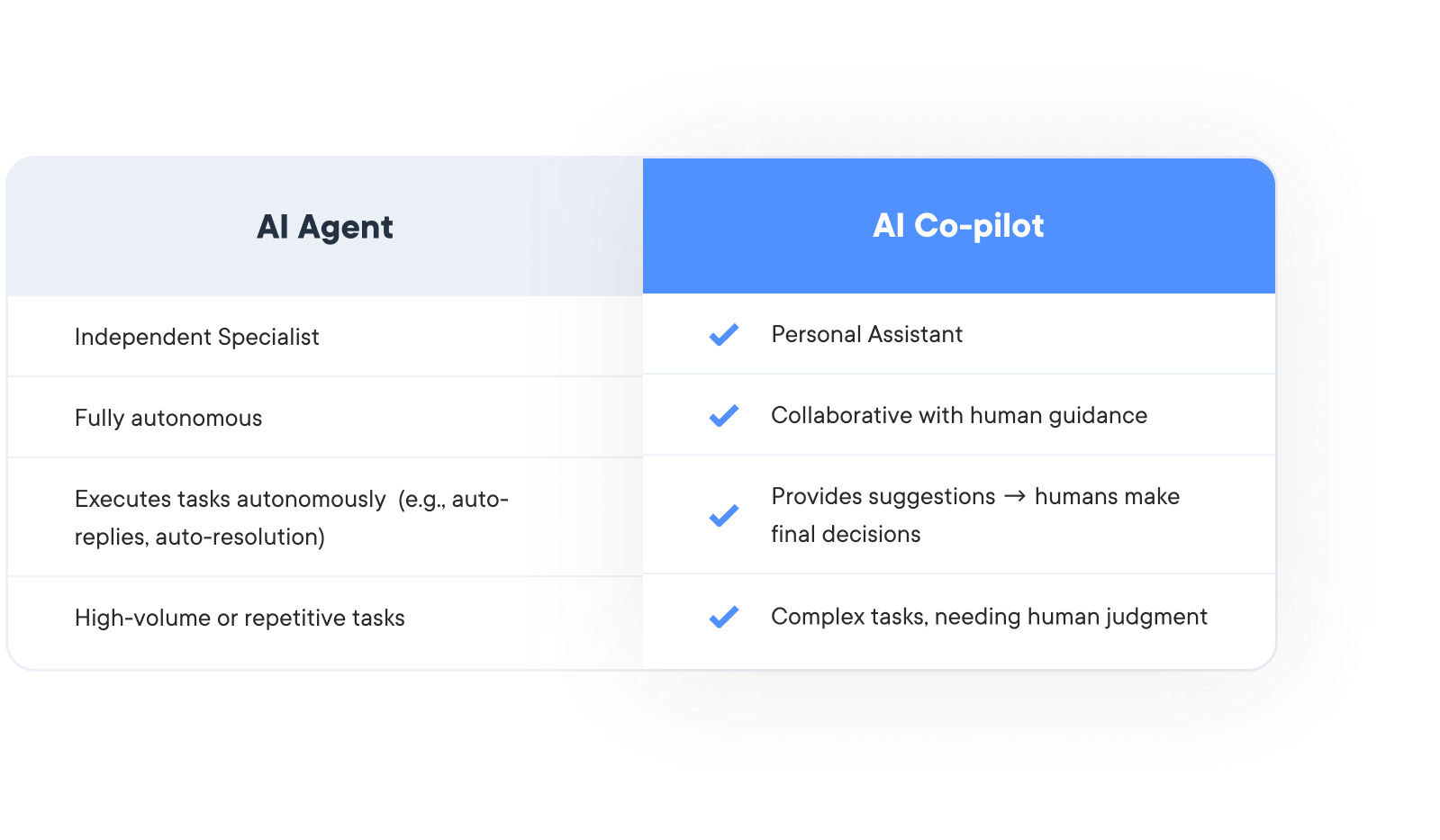
An AI Copilot is like a personal assistant standing right beside your human staff, helping you drive action with AI intelligence you can trust. In long-cycle B2B sales or complex support scenarios (like customized quotes or contract inquiries), it provides real-time suggestions, drafts professional responses, and analyzes context, but the final decision and action are always taken by the human. Every step requires human verification to maintain trust and accuracy. The AI plays a "supporting" role—typically drafting replies, summarizing chats, and suggesting scripts. For your team, it means your staff just got a dedicated digital assistant to tackle high-ticket decision-making.
An AI Agent, however, takes it a step further to sync your systems and orchestrate deep, fluid engagement across every channel. The AI is given specific goals and permissions. It can judge situations autonomously, execute multi-step tasks like automatically reading incoming WhatsApp messages, querying the knowledge base, and updating your enterprise CRM. Humans only need to intervene in highly complex B2B requirements or exception cases. Its typical behaviors include generating and sending responses directly and triggering subsequent automated workflows. For your business, it means "the AI finishes the job itself, and your staff only reviews the final results."
In our product roadmap, these are not mutually exclusive tools; they are two phases on the same evolutionary path. Take the CAAC smart customer service platform as an example. Many teams are currently using the AI Copilot model: the AI analyzes the chat in real-time and suggests a drafted response, but the human agent has the final say and hits "send" (Human + AI). The next step up is the AI Agent model: the AI understands the customer's message, checks the knowledge base, determines if it meets the criteria for a reply, and sends the message directly. It only hands over to a human for exceptions it cannot handle (AI replacing manual effort).
The Copilot is the lowest-risk, easiest-to-adopt format right now. The Agent takes over highly repetitive, clearly defined workflows end-to-end, freeing up human bandwidth to handle exception cases that require genuine empathy and judgment. This is the journey we recommend for our clients: build trust with a Copilot first, then gradually upgrade to an Agent. Simply put: An AI Copilot helps humans do the work; an AI Agent does the work for humans.
The Advantages of Implementing AI Customer Service / AI Agents
Support teams constantly face the dilemma of "surging message volumes" paired with "limited human resources." This is exactly where AI customer service solutions deliver tremendous business value:
- 24/7 Always-On Availability: Provides uninterrupted interactions, capturing leads even during after-hours peak traffic (e.g., 18:00–22:00).
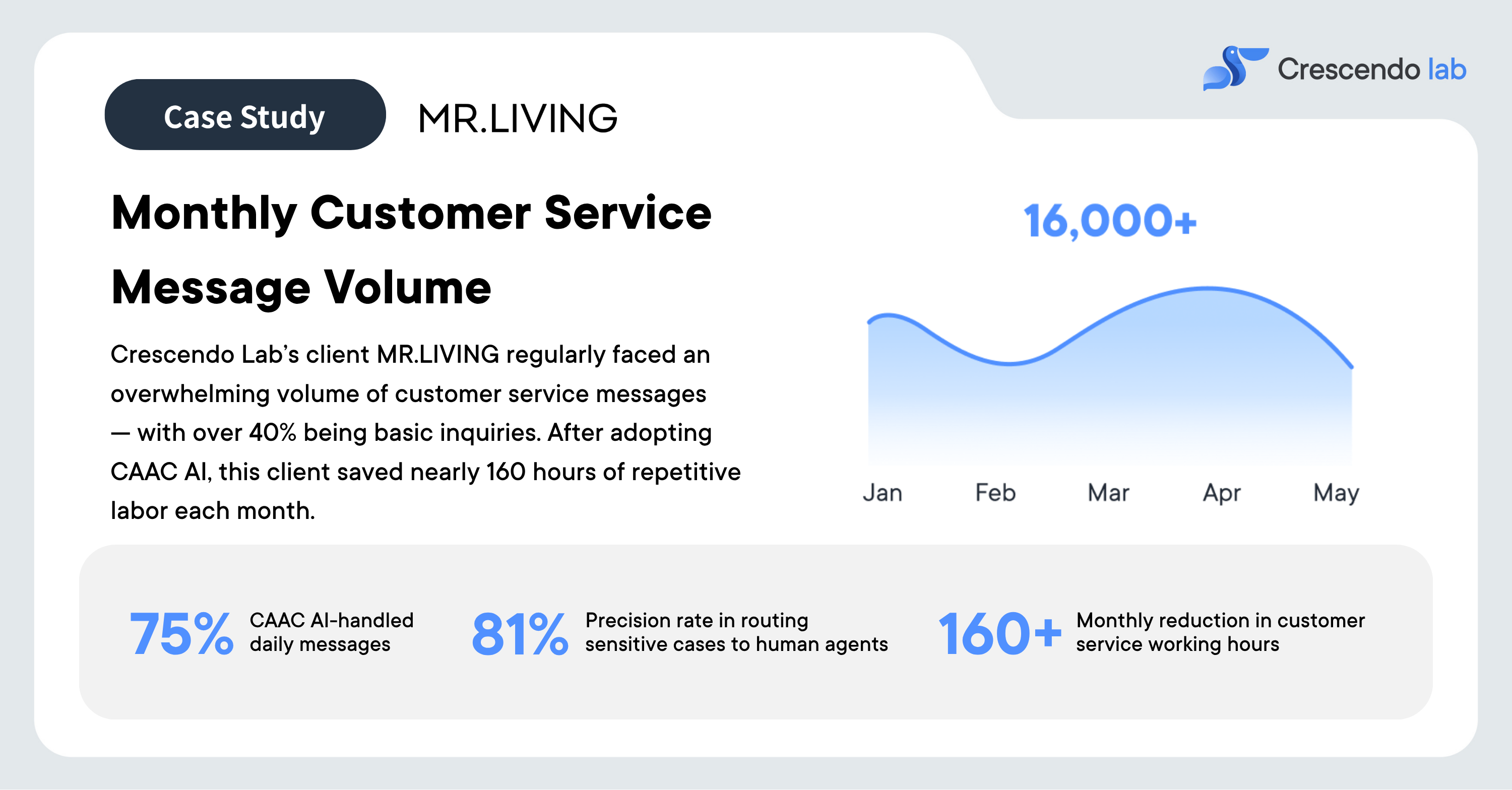
- Boost Team Efficiency via FAQ Automation: AI can handle up to 75% of routine inquiries, allowing your team to focus on high-value, complex cases. For example, Crescendo Lab helped furniture brand MR. LIVING save over 160 hours of manual support work per month.
- Reduce Employee Burnout: Automating repetitive tasks prevents staff fatigue, keeping agents energized for meaningful customer interactions.
- Shorter Response Times: AI drastically cuts wait times. According to a report by Zendesk, 86% of consumers say speed and accuracy directly influence their purchasing decisions—determining whether they buy from you or turn to a competitor.
- Seamless Omnichannel Support: AI support tools consolidate chats from LINE, FB, IG, WhatsApp, and your website into a single workspace, eliminating the friction of toggling between windows and channels.
- Build a Proprietary AI Data Asset: Transform fragmented, cold data from LINE, web, ads, and support chats into a complete, actionable asset. This doesn't just solve immediate problems; it creates a Single Source of Truth (SSOT) to drive data-led retargeting and business decisions.
- Increase Conversion Rates: Drive higher lead conversion through proactive, highly personalized product recommendations.
- Consistent Brand Voice: By strictly following the brand's knowledge base guidelines, the AI ensures every interaction aligns with your unique brand tone and compliance standards.
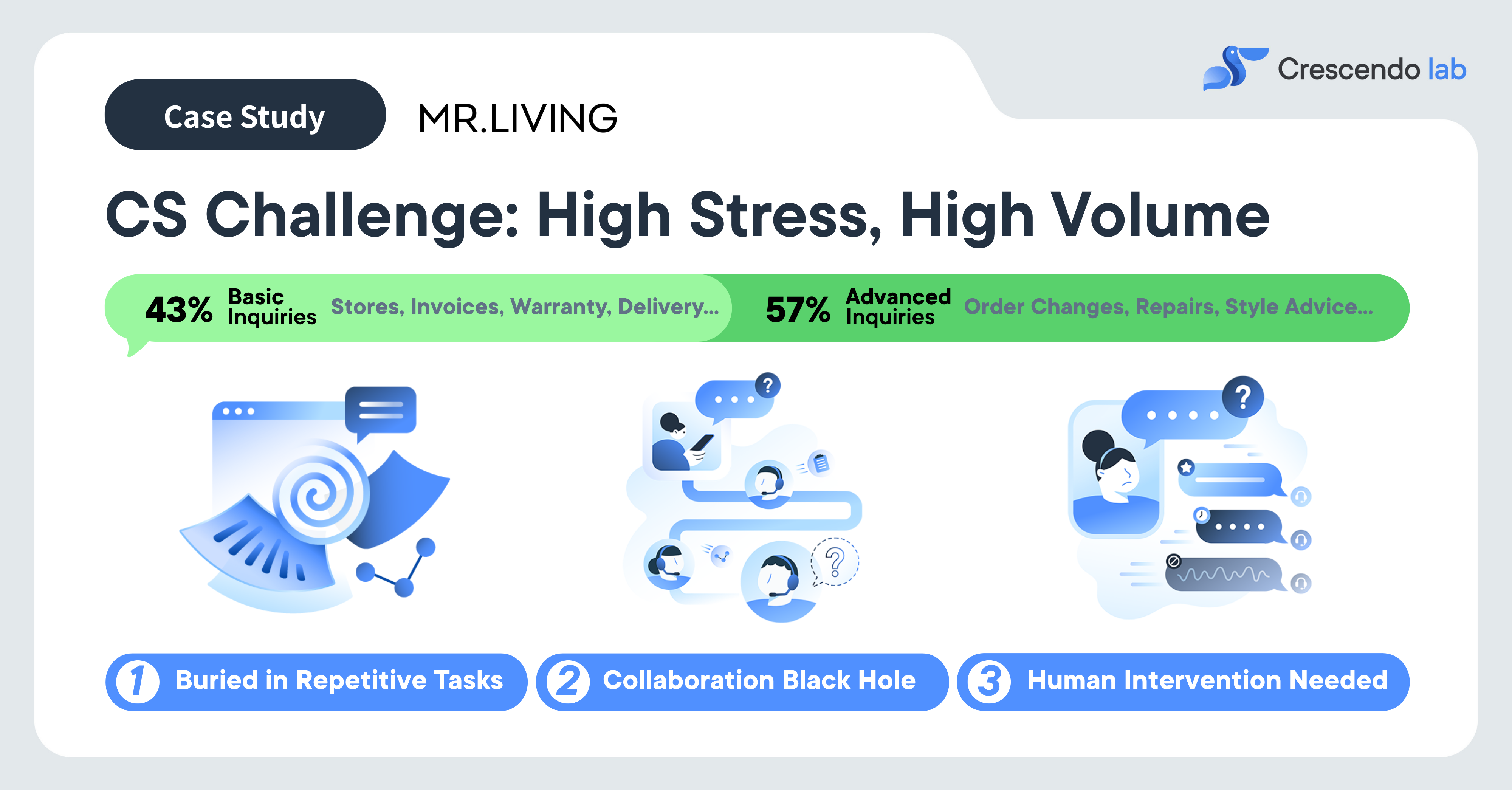
▲ The top 3 pain points for human support teams were completely solved by an AI Agent in the MR. LIVING case!
How to Implement AI Customer Service? 9 Real-World Use Cases for AI Agents & Copilots
As a brand assistant, an AI Agent resolves pain points across three distinct stages of customer support:
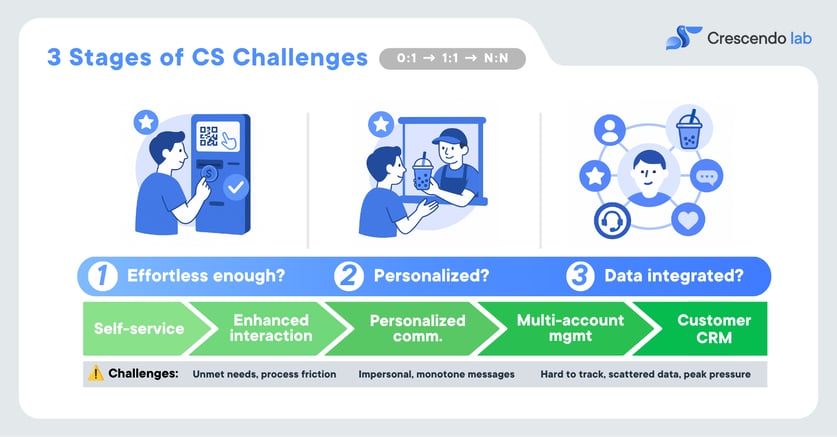
Teams of all sizes face different support hurdles. Moving from "1-to-1" to "N-to-N," AI solutions tackle these challenges through "Effort Reduction, Personalization, and Integration," showcasing multi-stage benefits for support teams!
1. Effortless AI Support | Automation & Efficiency
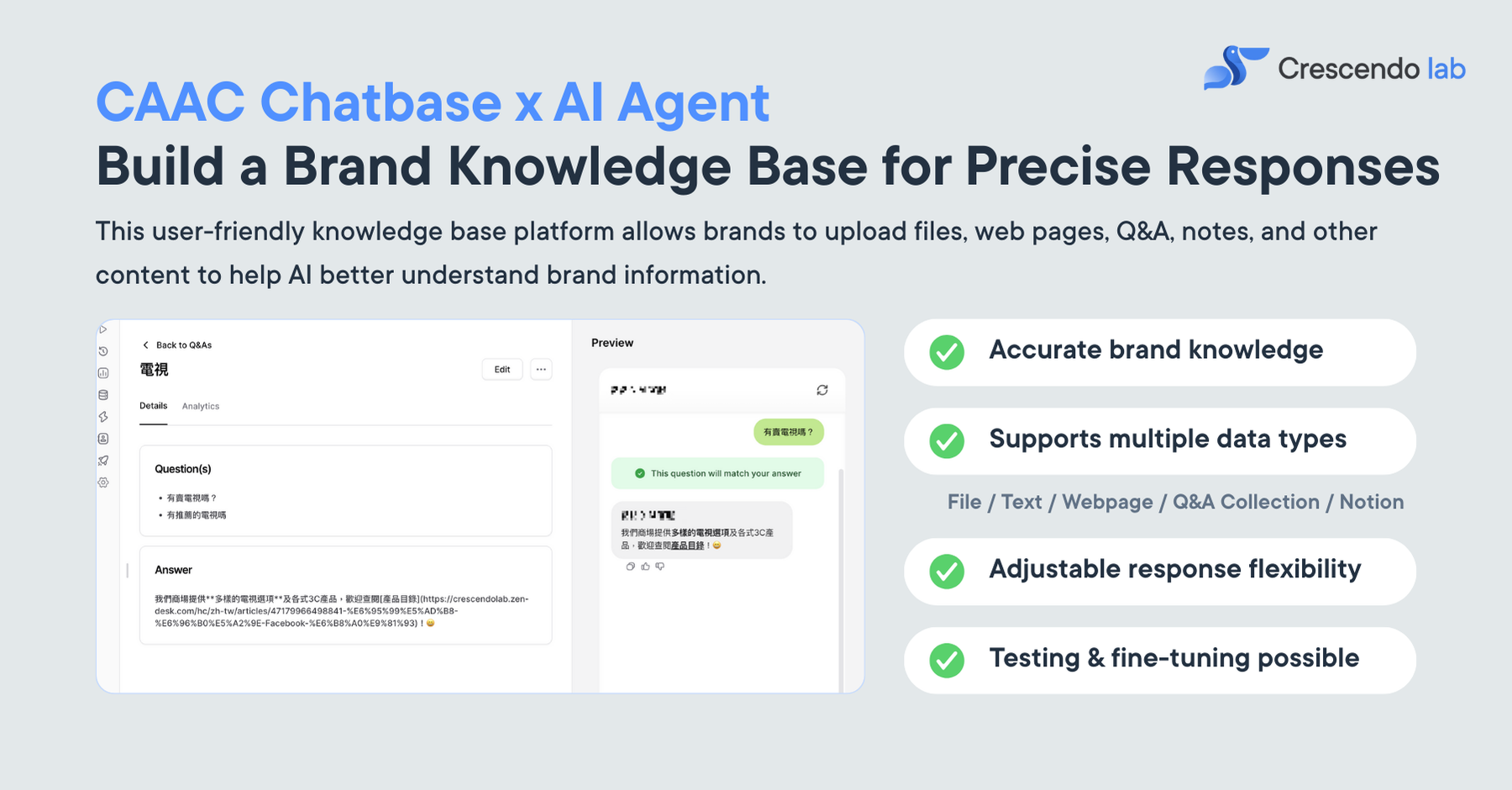
- Zero Wait Time for FAQs: Deliver instant answers for shipping costs, pricing, and operating hours. Using the CAAC Chatbase enterprise knowledge base, when a customer asks about shipping, the AI instantly scans uploaded documents or your website and replies accurately (no waiting required).
- Multilingual Support: Automatically detects and replies in the customer's preferred language, allowing brands to serve a global audience without hiring a massive multilingual team.
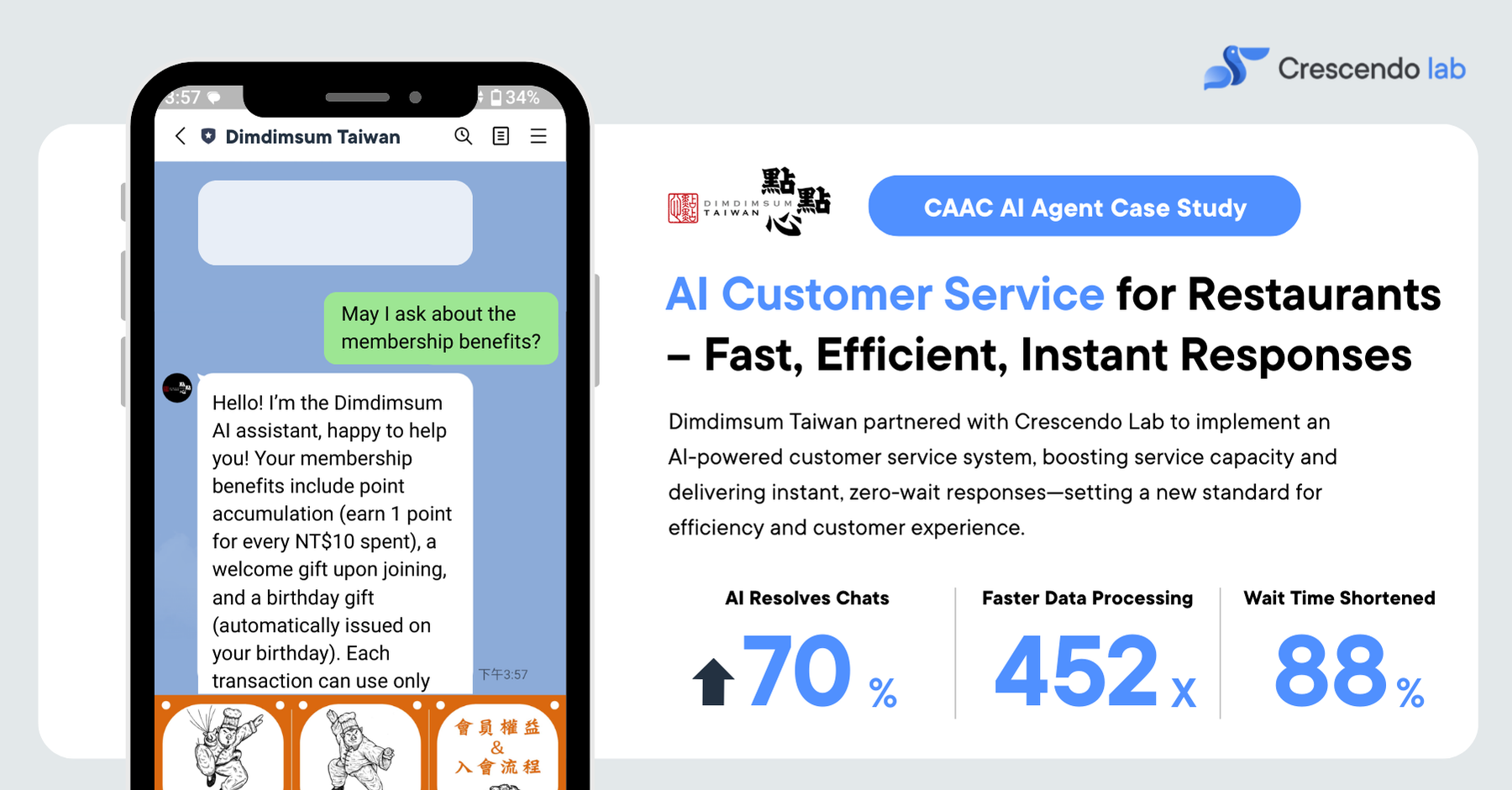
▲ By utilizing a one-click AI knowledge base, Dimdimsum built a digital assistant that slashed customer wait times by 88%!
2. Personalized AI Support | Sales Conversion & Lead Generation
- Never Miss a Sales Opportunity: Detect purchase intent and route potential buyers directly to the sales team. During the handover in CAAC, the AI Copilot automatically provides a "background summary," ensuring sales reps grasp the customer's needs instantly.
- Tailored Product Recommendations: By analyzing needs mentioned in the chat (e.g., dry skin), the AI Agent automatically recommends the best moisturizing products from the catalog and knowledge base, creating a frictionless guided shopping experience.
- Lead Qualification: For high-ticket industries like real estate or B2B consulting, the AI proactively asks key qualifying questions (budget, location) and routes qualified leads to the sales team only after they meet the criteria.
3. AI Data Integration | Internal Collaboration & Data Processing
- Sentiment Detection Radar: CAAC AI identifies negative emotions in a chat. If a customer expresses frustration or uses urgent phrasing, the system automatically flags the conversation and escalates it to a manager.
- AI-Generated Handover Notes: When transferring to a human agent, the CAAC AI Copilot generates an accurate summary of lengthy chat histories, ensuring seamless workflow transitions without the customer having to repeat themselves.
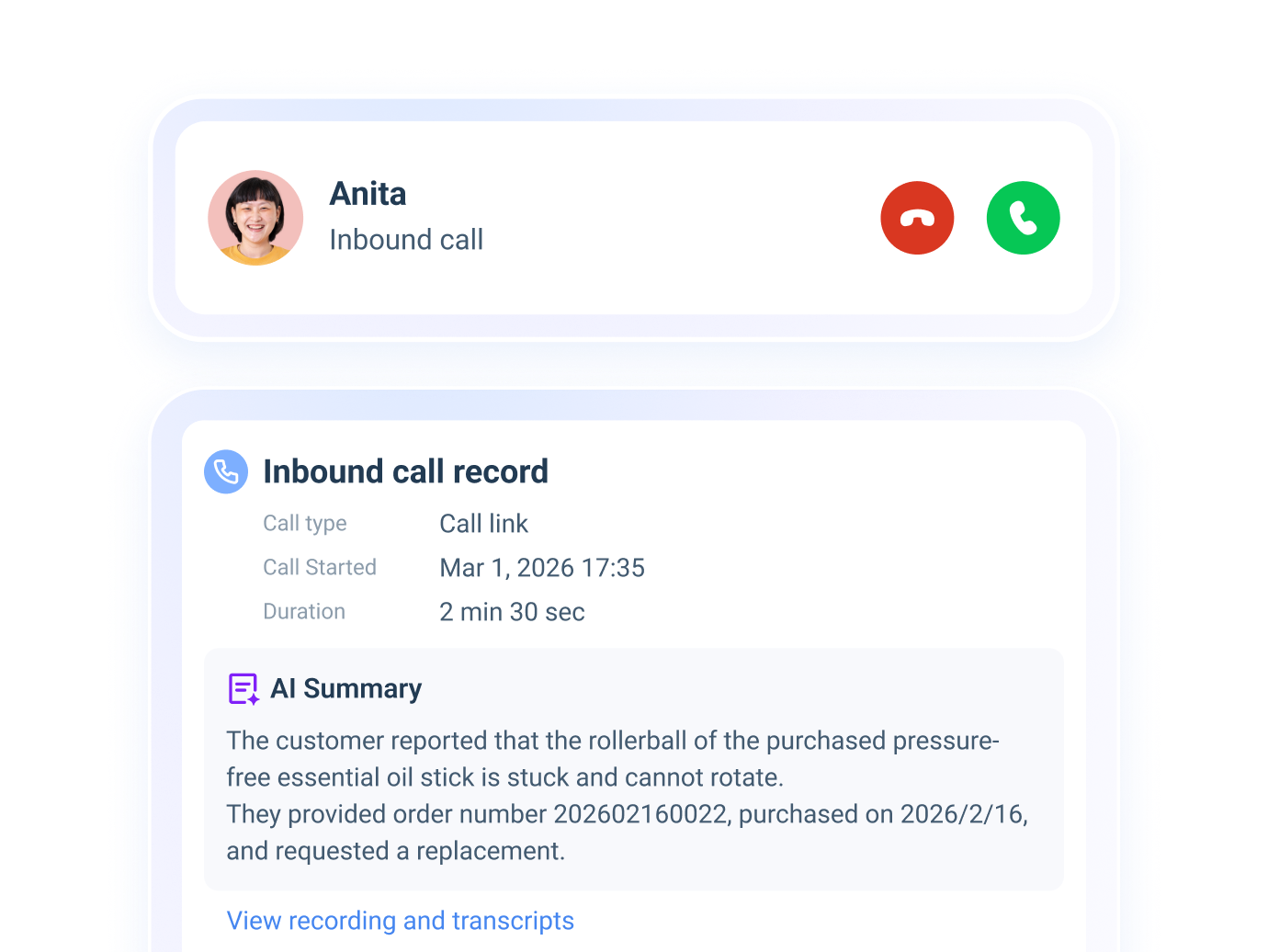
▲ AI-generated notes aren't just for text support; they are also supported by CAAC Voice services!
- Automated Customer Tagging: As customers interact within CAAC, the AI automatically applies "interest tags" (e.g., Winter New Arrivals) and syncs them to the MAAC system, empowering the marketing team to send highly targeted promotional broadcasts later.
- One-Click Keyword Expansion: Agents only need to type a quick draft (e.g., "Refund approved, 3 days"), and the CAAC AI Copilot's expansion tool transforms it into a polite, professional, and formal message.
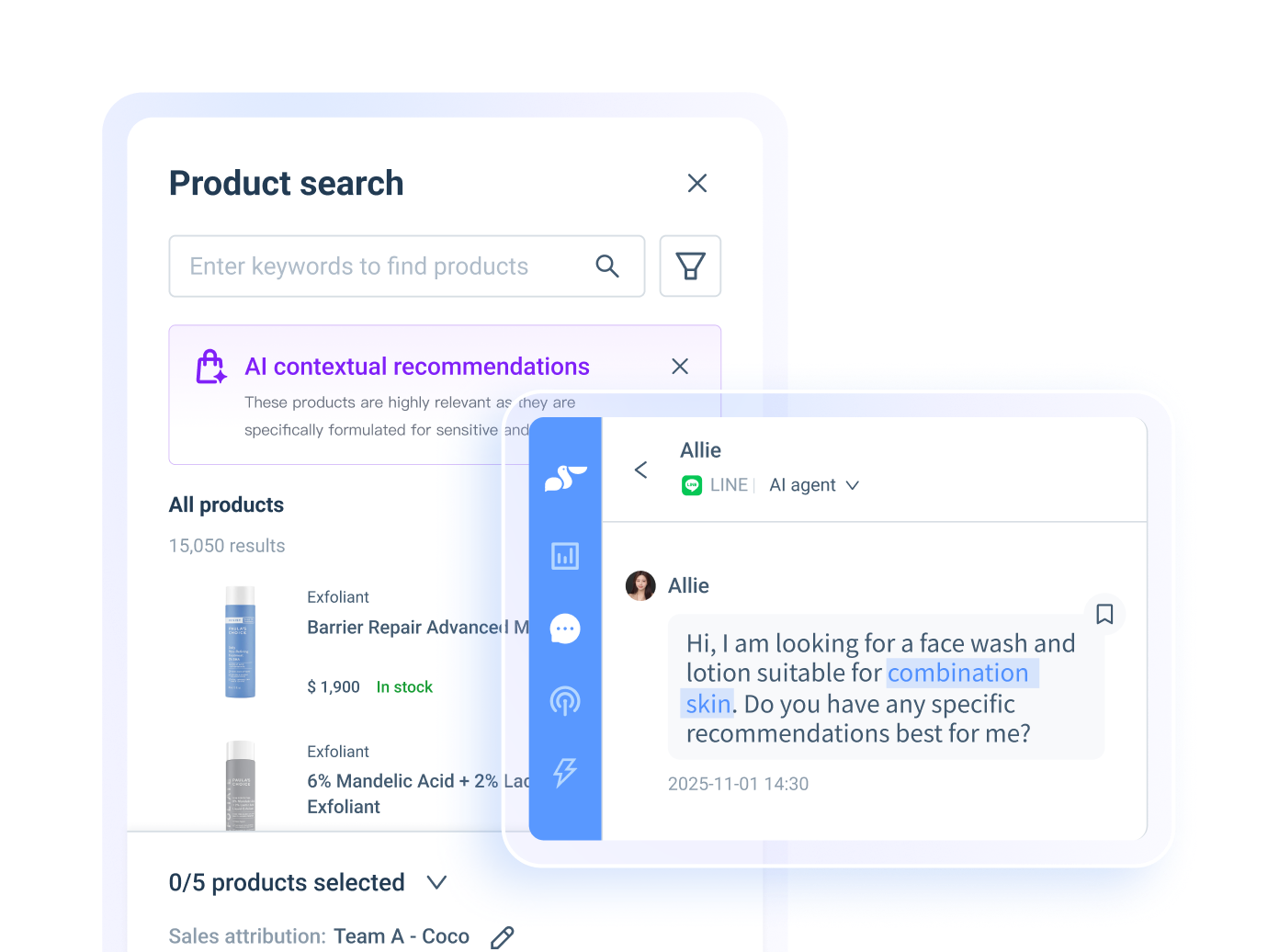
▲ A feature of the AI Copilot within CAAC: It doesn't just suggest replies; it can recommend products too!
How to Use AI to Elevate Customer Service Quality
Upgrading your customer experience doesn't mean tearing down your current system overnight. We recommend a three-phase deployment plan to smoothly integrate AI into your team, allowing you to build a solid foundation while adapting easily:
Phase 1: Omnichannel Automated Conversations — Build the Foundation & Centralize Data
First, consolidate all your scattered service, sales, and marketing chats into a single platform. Next, give your AI a "superbrain"—use CAAC Chatbase's one-click upload feature to feed it PDFs, website URLs, or existing internal documents.
- The Results You'll See: Through CAAC Chatbase, the AI learns your business knowledge in seconds and starts answering basic Frequently Asked Questions (FAQs) across all your social channels.
Want to embed a dedicated AI Agent on your website but don't know where to start?
Simply paste your website URL into CAAC Go to activate it!
-2.png?width=709&height=399&name=image%20(10)-2.png)
Phase 2: AI Consultant for Support Teams — The Ultimate "Copilot" to Save Effort
With the foundation set, let the AI act as a smart mentor for your support staff (AI Copilot). It will help draft responses, recommend appropriate canned messages, and even provide an automated "conversation summary" during handovers.
- The Results You'll See: Your staff no longer has to read chat logs from scratch or type out repetitive answers. Through CAAC AI's analytics, managers can easily spot top-performing areas and bottlenecks, instantly elevating team synergy!
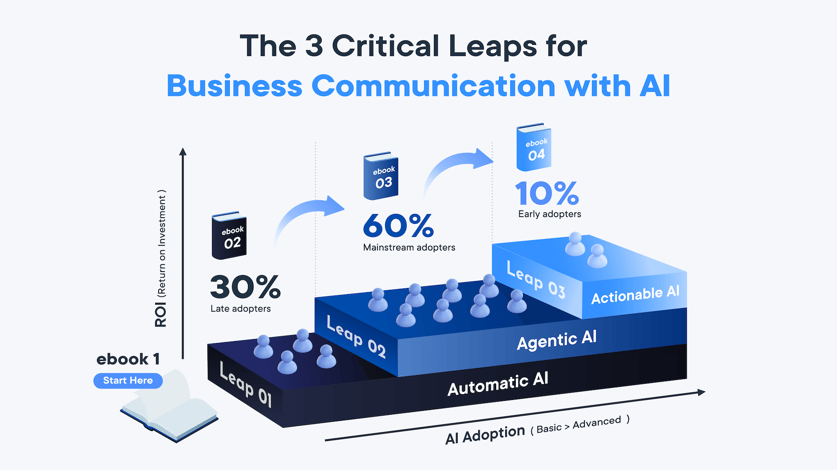
▲ Read the AI Business Communication ebook to unlock your new AI support assistant!
Phase 3: Autonomous Decision-Making AI Agent — Your 24/7 "Super Digital Rep" Goes Live
Finally, your AI Agent is ready to become a 24/7 professional representative! It can independently handle the vast majority of daily inquiries. It will only trigger a "smart handover" to a human expert when it encounters sensitive cases requiring a "human touch" or high-value sales opportunities.
- The Results You'll See: Customers get satisfactory answers even at 3 AM. We highly recommend running a "Pilot Phase" before a full launch to ensure the AI's tone and accuracy perfectly match your brand's voice!
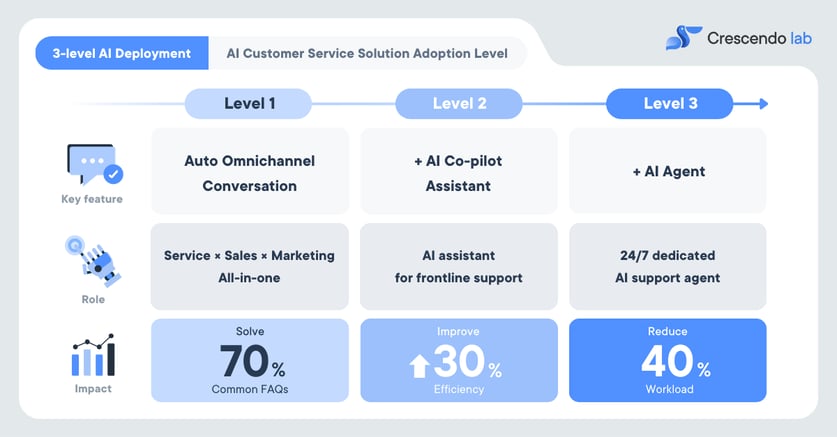
▲ Want a more detailed step-by-step guide to implementing AI in support? Find the right method in our 12-Week Enterprise AI Implementation Checklist!
5 Core Features Every AI Customer Service System Needs
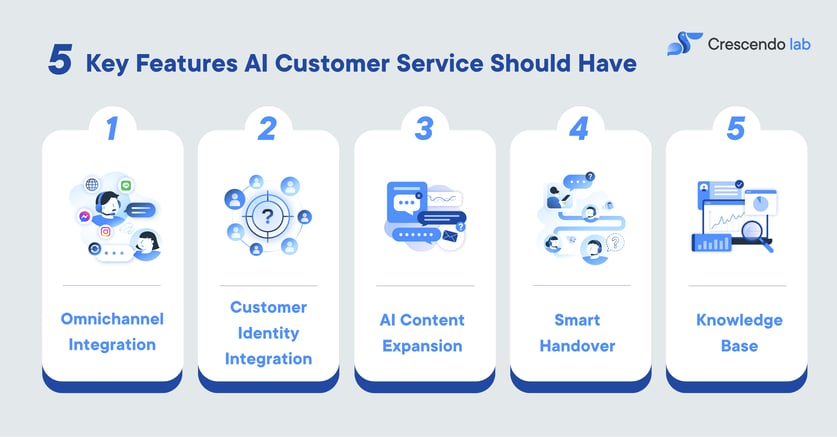
- Omnichannel Integration: Coverage across LINE, FB, IG, Website, and WhatsApp.
- Customer Data Integration & Closed-Loop Ecosystem: Automatically sync data across channels to build a 360-degree unified user profile. Break down the silos between marketing, sales, and support (deeply integrating MAAC, CAAC, and DAAC) so that support conversations can directly trigger personalized marketing journeys.
- AI Smart Content Expansion: Generate professional, polite responses from short keyword inputs.
- Seamless Human Handover: Provide background summaries when a case is escalated so customers never have to repeat themselves.
- No-Code Enterprise Knowledge Base: User-friendly "one-click upload" capabilities to easily manage your AI's brain.
5 Things to Consider When Implementing AI Customer Service
- Deployment Speed: Avoid the 3–6 month development cycles of traditional software. Choose a flexible partner that can launch in 4–6 weeks.
- Data Trust & Accuracy Control: Ensure the platform allows you to train the AI using your proprietary data to maintain 100% accuracy.
- Human-Machine Collaboration: AI should be a "collaborative partner," not a full replacement. Use sentiment detection to ensure high-value services retain a human touch.
- Data Protection & Security: Make sure your partner complies with international standards (e.g., Crescendo Lab's ISO 27001 certification).
- Measurable Performance Tracking: The tool must provide a clear dashboard to track issue resolution rates and conversion attribution, proving your Return on Investment (ROI).
Industry Use Cases for AI Customer Service
Furniture Retail | MR. LIVING
Nordic design furniture brand MR. LIVING faced the pressure of over 10,000 LINE messages every month. By implementing CAAC AI to handle routine questions about product specs and delivery status, they successfully automated 75% of general inquiries, saving over 160 hours of manual labor per month. This allowed the team to redirect their expertise into high-value "consultative selling."
Food & Beverage | Dimdimsum
When the legendary Hong Kong dim sum brand "Dimdimsum" rapidly expanded, they faced immense pressure from highly repetitive customer service requests. After implementing the CAAC AI Agent, they successfully automated 70% of conversations (such as reservations and operating hours). This slashed customer wait times by 88% and empowered the team to focus on delivering high-value hospitality.
Conclusion: AI Customer Service is a Growth Strategy, Not Just Automation
The rise of AI customer service isn't here to replace you; it's here to liberate you from repetitive grunt work.
When you choose the right AI customer service platform, you aren't just adopting a tool—you are hiring the ultimate backup for your team. With AI handling 70% of routine inquiries, providing cross-functional insights, and effortlessly drafting messages, you can save your most valuable time for the customers who truly need genuine, human care.


Hydra Liang
Content Marketing Specialist. Let’s co-create the future with AI!
Contact Me