
Table of Contents
TL;DR: A conversational AI platform is the infrastructure that runs AI-driven conversations across chat, voice and social, and connects that conversation data to marketing and sales. This guide defines the category, gives you 7 criteria to evaluate any vendor, compares five well-known platforms, and shows where Crescendo Lab's CAAC fits for omnichannel commerce and service teams.
The conversational AI space got crowded fast. Search "conversational AI platform" and you will land on everything from enterprise IT-helpdesk tools to ecommerce chat widgets to voice-agent infrastructure, all using the same label for genuinely different products.
That is a problem if you are actually trying to choose one. Much of the comparison content out there is either vendor self-promotion dressed up as objectivity, or a listicle that never explains why a platform suits one type of business over another.
This guide tries to do three things differently:
1. Define the category clearly and give you 7 concrete criteria, not vague "AI-powered" claims, to evaluate any platform against.
2. Compare Crescendo Lab's CAAC honestly against a few well-known names in the space, including where CAAC isn't the right fit.
3. Show you where CAAC specifically earns its place: for teams whose customers move between web chat, WhatsApp, social, and (increasingly) voice, and where marketing, sales, and service data need to work as one system rather than three disconnected tools.
What is a Conversational AI Platform?
A conversational AI platform is software that lets a business build, deploy, and manage AI-driven conversations with customers across multiple channels — text and voice — using natural language processing and large language models rather than fixed scripts.
The distinction that matters: a platform doesn't just answer one type of question in one place. It's meant to be the underlying layer a business builds multiple conversational experiences on — a support agent, a sales assistant, a voice agent — using shared data, shared training, and centralized reporting.
That is different from a single chatbot widget, which typically handles one channel, one use case, and does not extend much beyond FAQ-style automation. (Further reading: three critical leaps for AI business communication.)
Chatbot, AI chatbot, or conversational AI platform: what's the actual difference?
These terms get used interchangeably, but they map to different technology generations and different budgets:
- 1. Online customer service tool: The broadest term — any tool that lets a customer talk to a brand online (LINE, WhatsApp, Facebook, Instagram, web chat), whether a human or a bot replies.
- 2. Chatbot (rule-based): Matches keywords, replies with fixed templates. Ask it something slightly differently phrased and it breaks, usually escalating to a human anyway.
- 3. AI chatbot: Built on generative AI and natural language understanding — it grasps intent, holds context across a conversation, and pulls from backend systems (checking an order, confirming stock, recommending a product).
- 4. Conversational AI platform: Extends AI chatbot capability across multiple channels and modalities (text and voice), with the infrastructure to manage teams, route conversations, and connect that data to the rest of the business — marketing, sales, analytics.
- 5. Voice AI / voice customer service: Takes all of the above into phone or voice-call conversations, turning what used to be an unrecorded, unanalyzable channel into structured data.
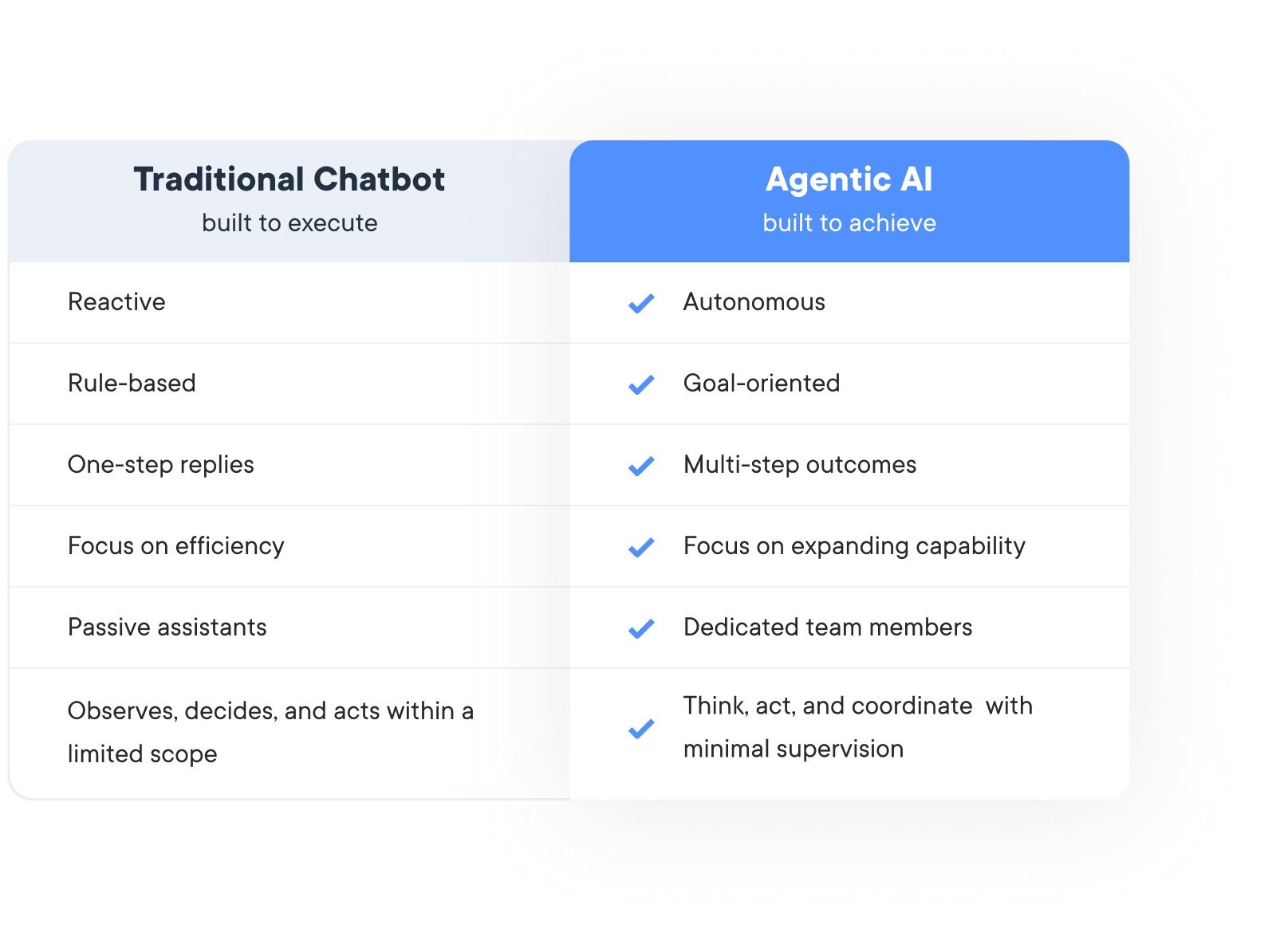
In short: conversational AI has moved through three generations — keyword bots → semantic AI conversation → agentic AI that can access data and complete tasks on its own. Every product marketed as a "conversational AI platform" sits somewhere on that line. That's exactly why "does it have AI" isn't a useful filter — the real questions are how far along that line it sits, which channels it actually covers, and whether it connects to the data you already have.
How do you evaluate a conversational AI platform in 2026?
Use 7 criteria: automation and AI depth, self-service, proactive outreach, personalisation, omnichannel coverage including voice, marketing-to-sales-to-service data unity, and measurable outcomes on real conversations. The first four are established customer experience trends. The last three are what separates platforms in 2026.
The 4 established trends
Based on a SuperOffice survey of more than 60 customer service managers and the Sprout Social Index, four trends consistently come up as the most important in the industry:
- Automation and AI. 58% of service managers name this the single biggest trend. Automating common questions can cut service costs by around 30%, freeing teams for higher-value, complex conversations.
- Self-service. 67% of customers would rather use a self-service option than speak to an agent, and 88% expect self-service to be available at all. The key is putting help where customers already are, not buried in an internal knowledge base.
- Proactive outreach. Service is shifting from reactive problem-solving to proactive engagement. SuperOffice reports that 84% of customer-centric companies see stronger revenue growth.
- Personalisation. McKinsey's Next in Personalization research found that 76% of consumers get frustrated when brands communicate without knowing who they are. Real personalisation requires the right channel, first-party data and a genuinely tailored experience, not just a name merge field.
The 3 new benchmarks for 2026
By 2026, with AI maturity across the board, three additional benchmarks separate the platforms that deliver from the ones that only claim to:
- Omnichannel depth, including voice. Can the platform manage every conversation from one backend, covering web, social, WhatsApp and phone, with history carried across channels?
- Marketing, sales and service data unity. Service should not operate in a silo. When a service team can see the customer tags and profile data marketing has already built, every reply gets sharper, and sales attribution becomes possible directly from the conversation.
- Measurable outcomes, not just claimed capability. Nearly every platform claims it can answer FAQs. The real differentiator is the resolution rate on real conversations, and whether the platform demonstrably improves over time from real feedback, not just at demo stage.
According to Fortune Business Insights, the global conversational commerce market was valued at USD 12.77 billion in 2025 and is projected to reach USD 39.53 billion by 2034, a CAGR of 13.38%. For Singapore and wider APAC businesses, that makes now a reasonable window to treat service as a revenue channel rather than a cost centre.
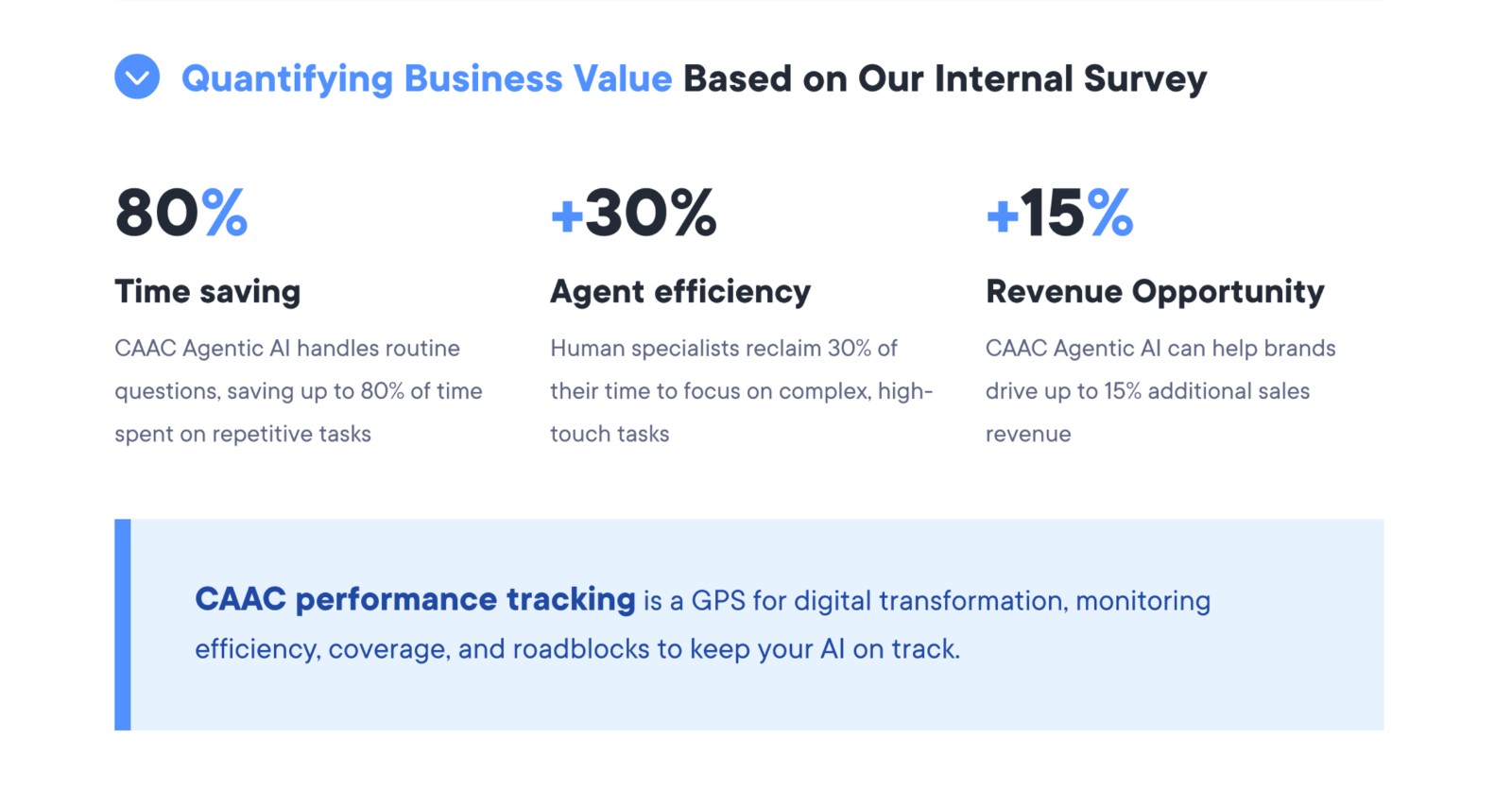
⬆️ Core metrics Crescendo Lab prioritizes when building Conversational AI platforms for our clients.
Conversational AI platform comparison: how does Crescendo Lab CAAC stack up?
Note: this table reflects general positioning, not verified line-by-line specs — pricing and feature sets change often, so confirm details directly with each vendor before deciding.
| Crescendo Lab CAAC | Vendor A | Vendor B | Vendor C | Vendor D | |
|---|---|---|---|---|---|
| Core positioning | Agentic AI conversation platform unifying service, sales, and marketing | AI customer service layered on a support-desk product | AI agent layered on a ticketing/support suite | Outcome-based conversational AI for enterprise CX | Enterprise conversational AI/automation across voice and chat |
| Channel breadth | LINE, WhatsApp, Facebook, Instagram, web chat, SMS, email, voice | Web chat, email, some social | Web chat, email, social, voice add-ons | Voice- and chat-first, multichannel | Broad multichannel including voice |
| Marketing/sales data unity | Native — shares customer tags/profiles with Crescendo's MAAC and DAAC platforms | Limited — primarily support-focused | Limited — CRM add-ons required | Not a core focus | Partial, depends on integration |
| Voice/call support | CAAC Voice Call — click-to-call, AI transcript + summary | Add-on/partner dependent | Add-on | Core capability | Core capability |
| Best suited for | Mid-to-large omnichannel commerce and service brands, multi-outlet/multi-account teams | SaaS and product-led support teams | Enterprise support/ticketing-heavy orgs | Large enterprise CX transformations | Large enterprise, high call-volume operations |
| Free tier | CAAC Go — free, unlimited for small sites | Limited trial | Limited trial | Enterprise sales-led, no public free tier | Enterprise sales-led |
The honest read: Vendor B, C, and D are built for large enterprise deployments with deep ITSM/governance requirements. If that's your primary need, they're worth evaluating directly. CAAC's edge shows up in a more specific scenario — see below.
Where Crescendo Lab CAAC actually fits best
CAAC isn't trying to be the biggest enterprise conversational AI platform on the market. It's built for a specific, common situation: brands running commerce or service conversations across web chat, WhatsApp, and social, where the service team needs the same customer data the marketing team already has.
That's a structural difference, not a feature checklist item. In most platforms, service and marketing data live in separate systems. In CAAC, they're the same system, CAAC connects natively to Crescendo Lab's marketing platform (MAAC) and data platform (DAAC), so a service rep sees the full customer profile — purchase history, marketing tags, prior conversations — before they even reply. That same connection supports sales attribution directly from a conversation, not from a separate analytics pass afterward.
In practice, this fits best for:
- Mid-to-large ecommerce and retail brands running support and sales through the same channels customers already use to browse
- Service-heavy businesses (consultations, appointments, bookings) that want conversations to double as a lead and sales record
- Teams managing multiple accounts, outlets, or brands that need centralized routing, permissions, and handover — not just a single inbox
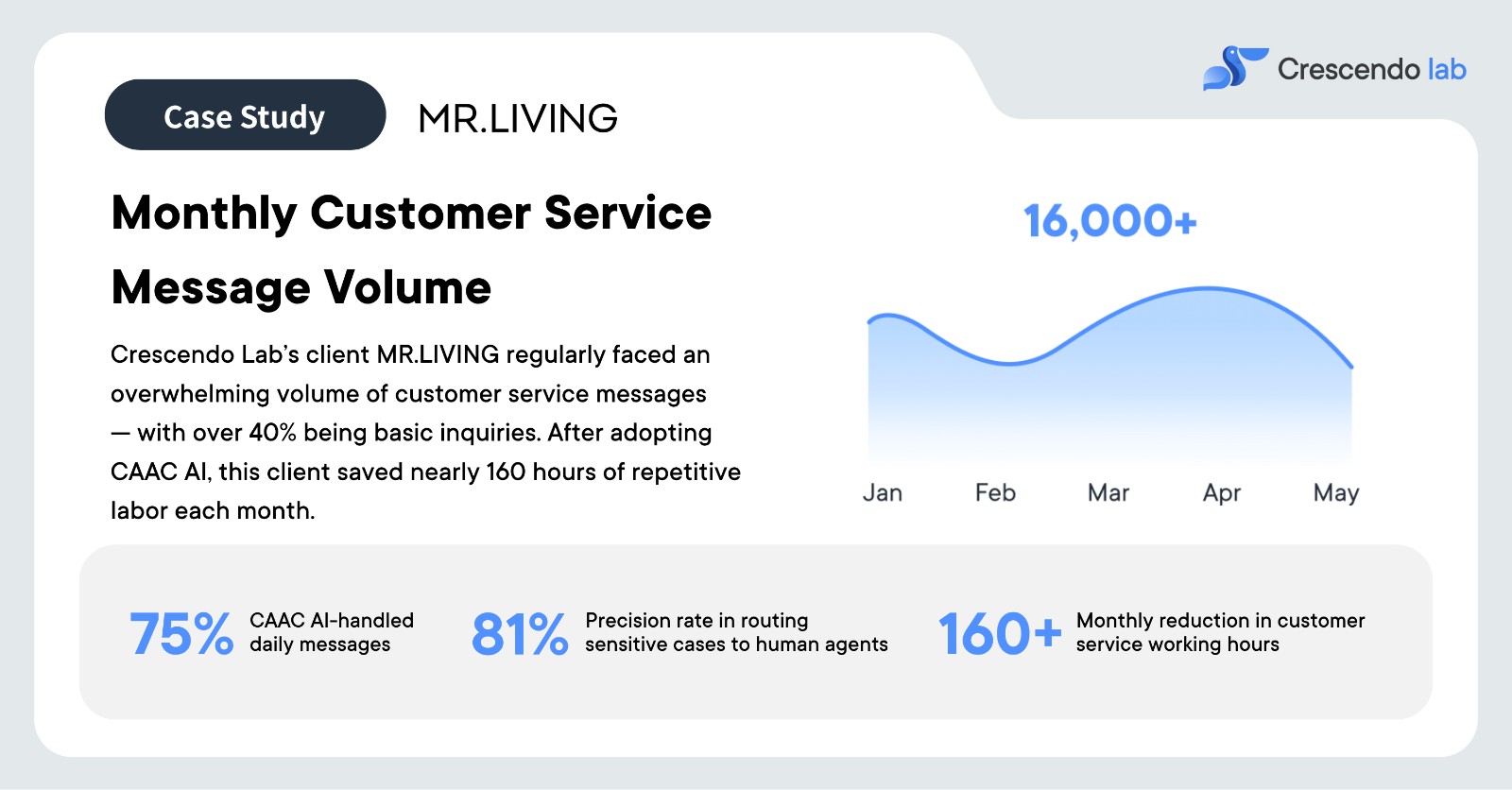
CAAC's AI Agent resolves roughly 70% to 85% of repetitive service conversations autonomously. Brands using it have reported service-hour reductions of up to 160 hours a month, and one restaurant chain increased conversation-handling capacity by 3.6x. You can read the detail in the Mr. Living success story or browse more customer success stories.
Is there a free conversational AI platform? Start with CAAC Go
Yes. CAAC Go is free to start with no credit card and no code. Paste your website link, and the AI reads your site, trains itself and starts answering visitors. It is built for small sites, solo teams and local service businesses, with paid upgrades from USD 29 per month.
Not every business needs a full enterprise platform on day one. If you are running a small site, a local service business (clinics, studios, bookings-based businesses) or an early-stage ecommerce store, CAAC Go is built for exactly that:
- Live in minutes, no code: Paste your website link and product or service info — the AI reads it, trains itself, and starts answering visitors.
- Genuinely free to start: No credit card, no sales call. Sign up and watch it respond to real visitors before deciding whether to upgrade.
- Covers you around the clock: FAQs answered, booking requests captured, every conversation logged — including the traffic that comes in outside business hours.
- Shows you what matters: Resolution rate, leads and bookings captured, and what visitors are actually asking — so you know what to train next.
- Affordable to scale: $29/month unlocks full contact ownership and deeper AI training; $79/month adds integrations, API access, automation, and analytics. AI conversation quota is included at every tier — no hidden usage fees.
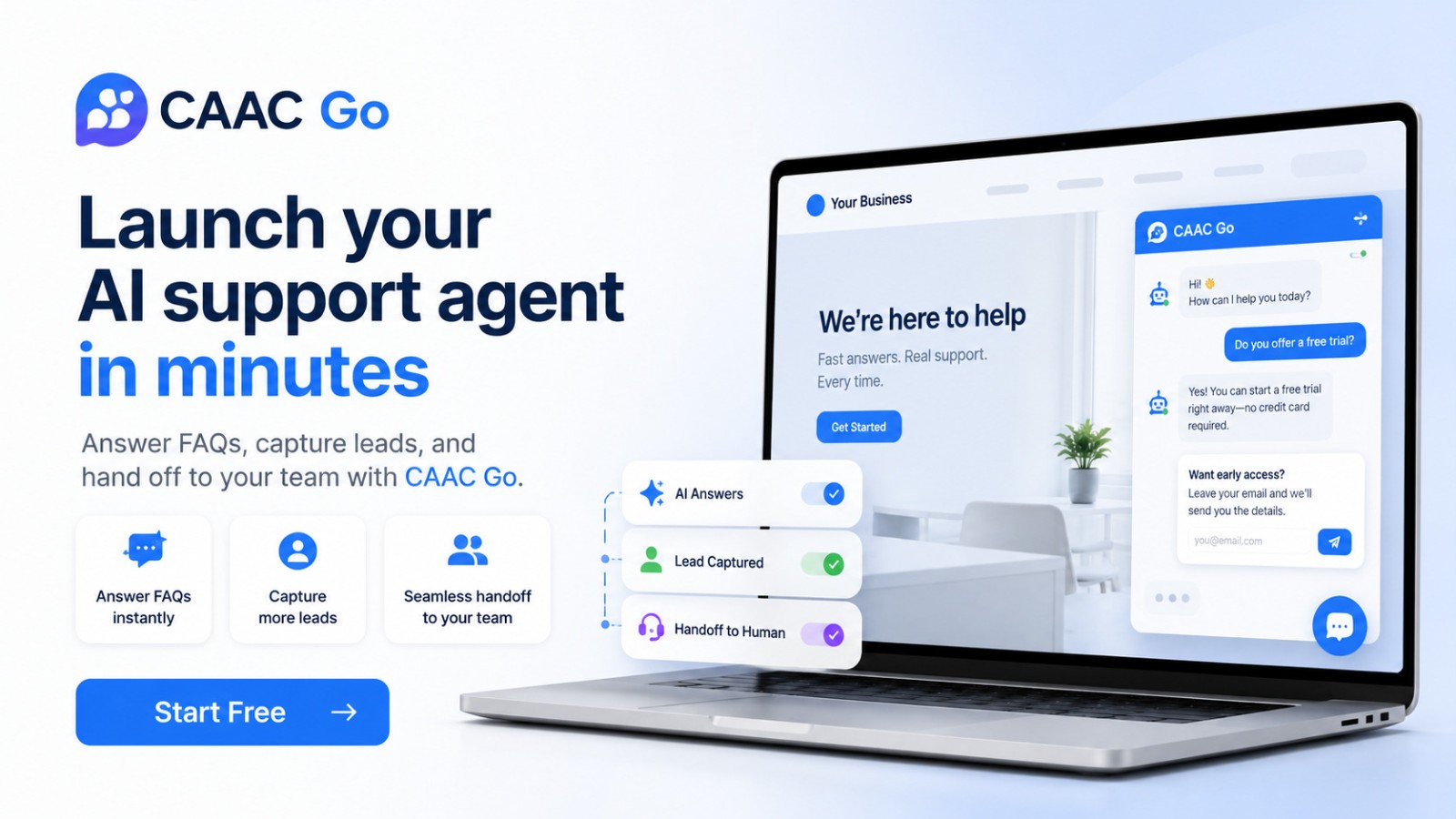
CAAC Go runs on the same AI engine as Crescendo Lab's enterprise platform, so you're testing genuinely production-grade AI, not a stripped-down demo version — and upgrading later means no migration, just more capability on the same system.
👉 [Start CAAC Go free] and have it answering your website visitors today.


Why 800+ Brands Choose Crescendo Lab
When your customer service team has to manage multiple LINE Official Accounts, branches, teams, and a high volume of messages across multiple channels every day, you need more than just a chatbot. You need an enterprise-grade platform that can streamline team operations, connect customer data, and turn customer service into a revenue-generating opportunity. That’s where Crescendo Lab CAAC stands out.
In this section, we’ll address some common misconceptions about Crescendo Lab in the market:
Misconception #1: “Crescendo is just a LINE marketing tool, and customer service is an add-on.”
The reality is that CAAC (AI Conversation Analytics and Automation Cloud) was built with customer service and sales conversations at its core. Marketing data isn't separate or irrelevant. It is some of the most valuable customer intelligence available to service and sales teams, giving them a stronger advantage in every customer conversation.
Misconception #2: “Crescendo only supports or focuses on LINE.”
The reality is that CAAC brings LINE, Facebook, Instagram, WhatsApp, website chat, SMS, email, and voice calls into a single unified inbox. It supports multi-account management and granular permission controls, while working seamlessly with MAAC and DAAC to help teams unlock and analyse valuable conversation data. This makes it ideal for omnichannel customer service across multiple brands, branches, and teams.
Misconception #3: “Crescendo's AI doesn't have proven results.”
The reality is that CAAC's AI Agent can independently resolve around 70–85% of repetitive customer inquiries, helping enterprises achieve up to 3.6× greater service efficiency. See the results in action in the Mr. Living success story.
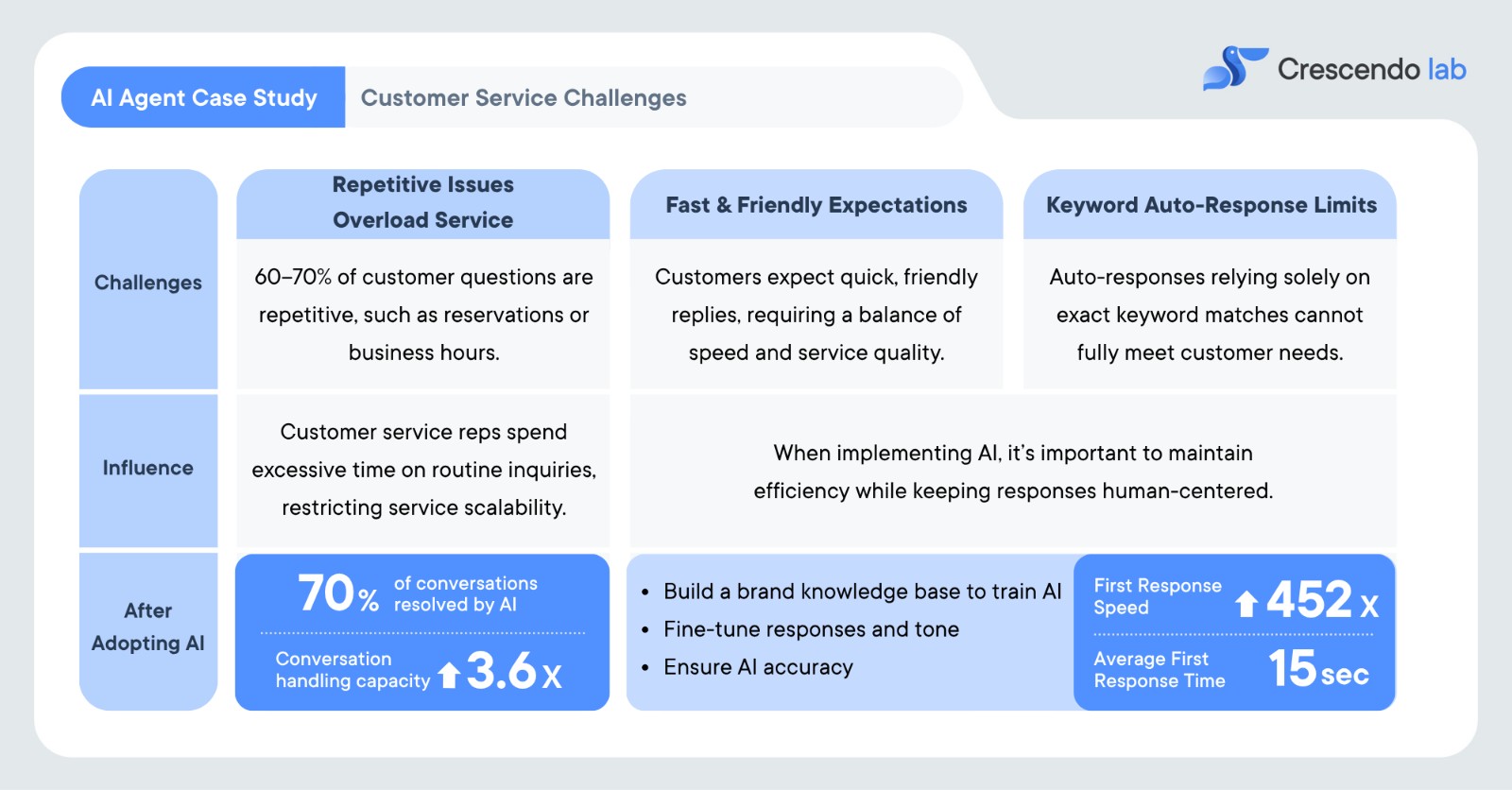
How CAAC Cuts Service Costs While Improving the Customer Experience
Automation & AI Agent: Work faster with response templates, intelligent AI assistance, automatic message expansion, and context-aware reply drafting. CAAC also uses round-robin routing to automatically assign conversations to the right person or team. Going a step further, organizations can build their own Knowledge Base to quickly deploy CAAC AI Agent, allowing AI to learn the brand’s knowledge, tone of voice, and response guidelines for end-to-end customer service.
Self-Service: Combine multi-page, multi-card Rich Menus on LINE Official Account with automated responses to surface FAQs exactly where customers need them. Menus can also be personalized based on membership status or customer tags. CAAC AI Agent can connect a Web Widget with LINE to capture customers’ initial needs across every touchpoint, including your website.
Proactive & Personalized Engagement: This is where CAAC delivers an advantage that’s difficult for competitors to replicate. CAAC leverages customer tags and first-party data accumulated through MAAC, giving service agents a 360° view of each customer to make every conversation more relevant and informed. Conversations can also be connected to Sales Attribution, while SMS expands your reach across additional touchpoints.
In short, CAAC breaks down service silos by putting the customer data your marketing team has built up over time to work across the entire customer journey—creating a seamless experience from marketing to sales to service. Combined with more than 85 billion messages delivered annually, this foundation is why Crescendo Lab has maintained its position as a LINE Gold Technical Partner for five consecutive years.
CAAC Voice Call: Turning phone conversations into usable data
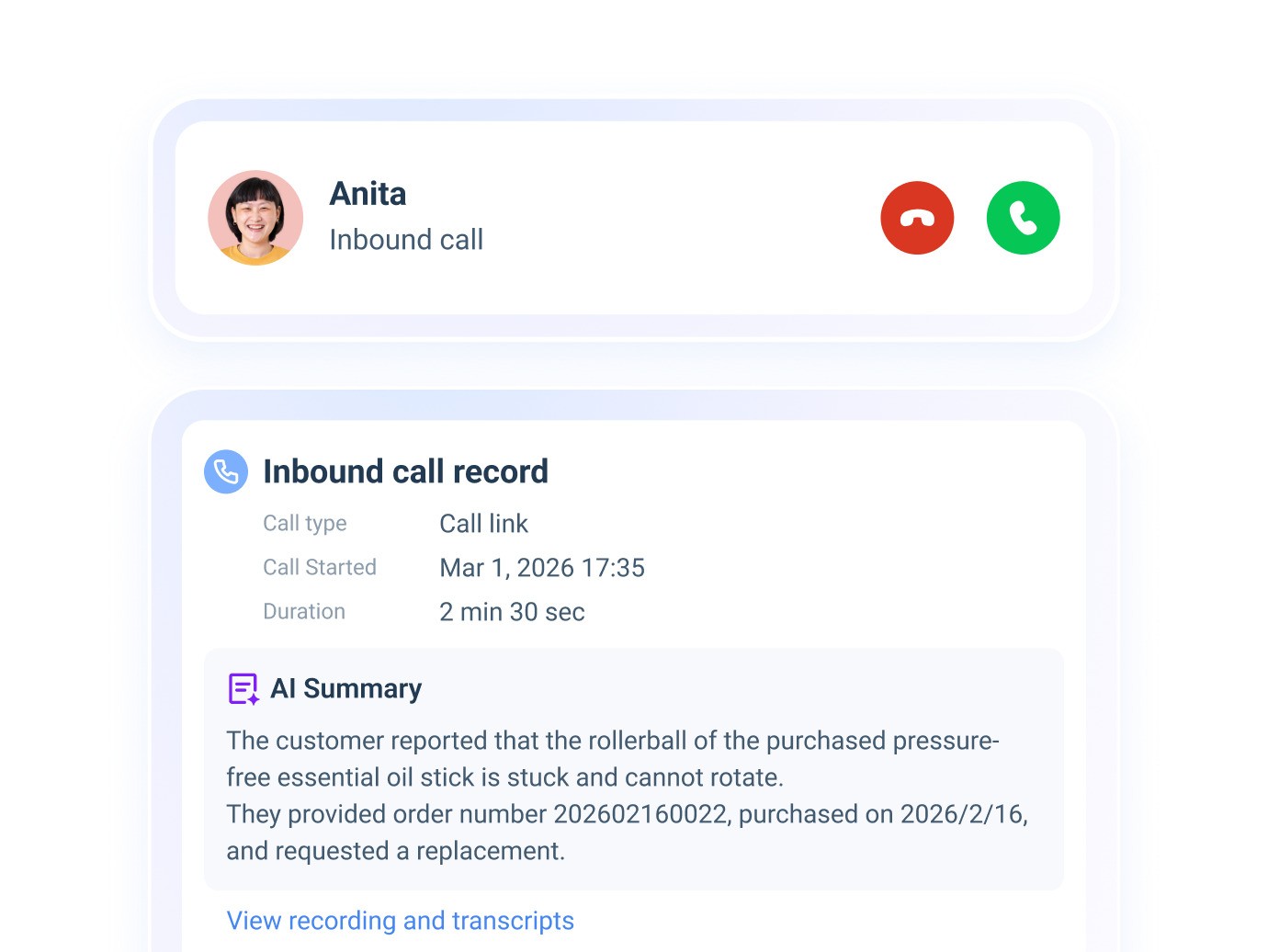
Voice has historically been the blind spot in customer service data. A phone call happens, and then it's gone — no transcript, no searchable record, no way to tell if the caller was a repeat high-value customer. CAAC Voice Call closes that gap:
- One-click calling, no number exchange: Send a call link directly from CAAC — the customer clicks and connects via VoIP in their browser, no app switch, no phone hardware needed. Real-time video is supported too, useful for consultations or product walkthroughs.
- Automatic transcript and AI summary: Within 5–10 minutes of a call ending, CAAC generates a recording, full transcript, and AI-written summary — capturing intent, key pain points, and next steps, so the next person picking up the case doesn't need to re-listen.
- Voice data feeds the same system as everything else: Call data becomes structured, AI-ready information connected to Crescendo's DAAC data platform — usable for trend analysis and, downstream, marketing automation.
This is designed for businesses whose customers are already messaging them on web chat or WhatsApp and, mid-conversation, need to jump to a call — without re-explaining the issue on a new channel.
7 things Crescendo Lab CAAC does that most platforms don't
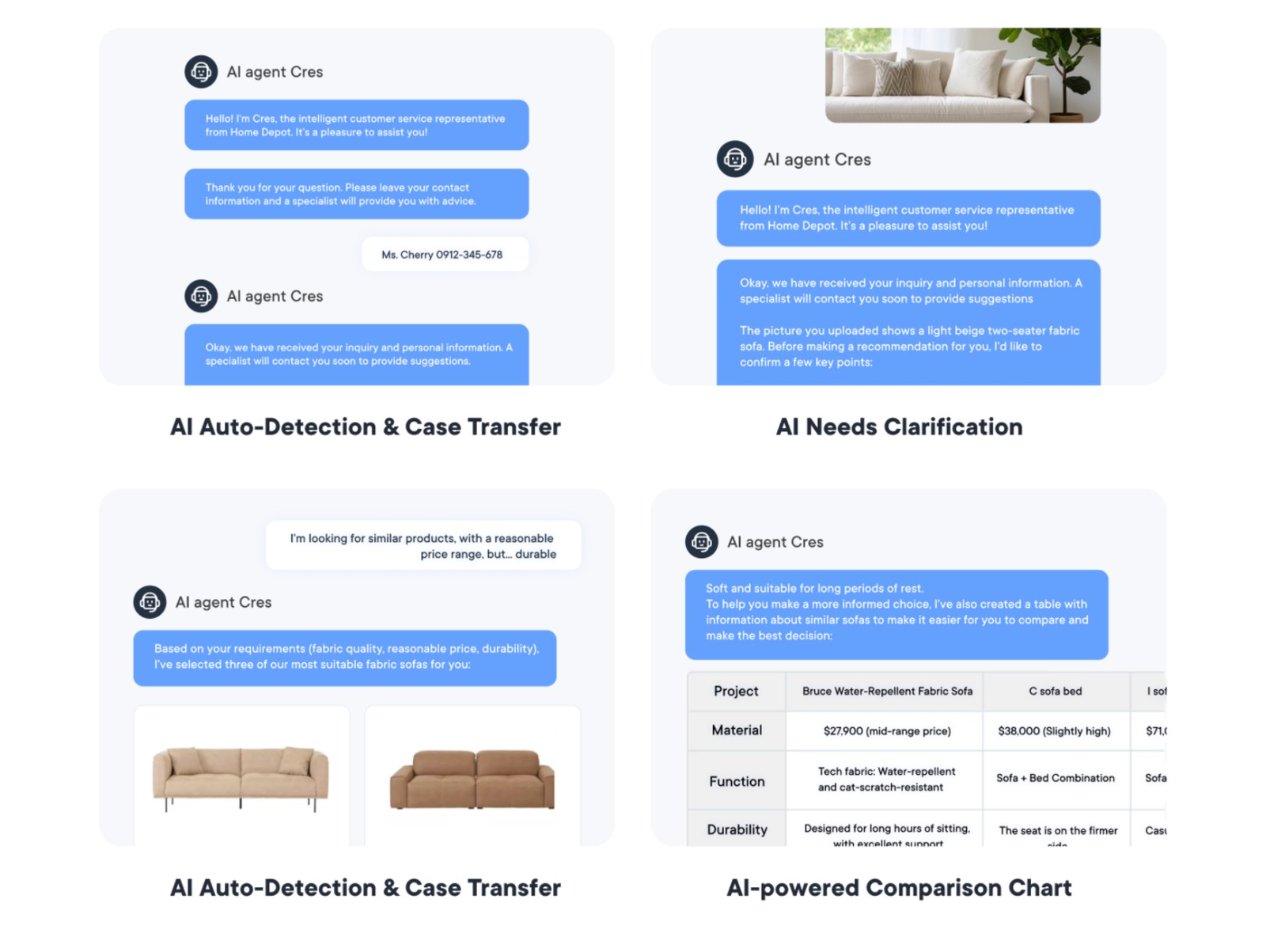
1. Autonomous AI + human co-pilot, in one system
CAAC isn't just a chatbot. It runs an autonomous AI agent that resolves roughly 85% of repetitive conversations around the clock, plus a co-pilot mode that assists live agents — complex or sensitive cases get handed off with full context, so customers never repeat themselves.
2. AI product recommendations built into the conversation
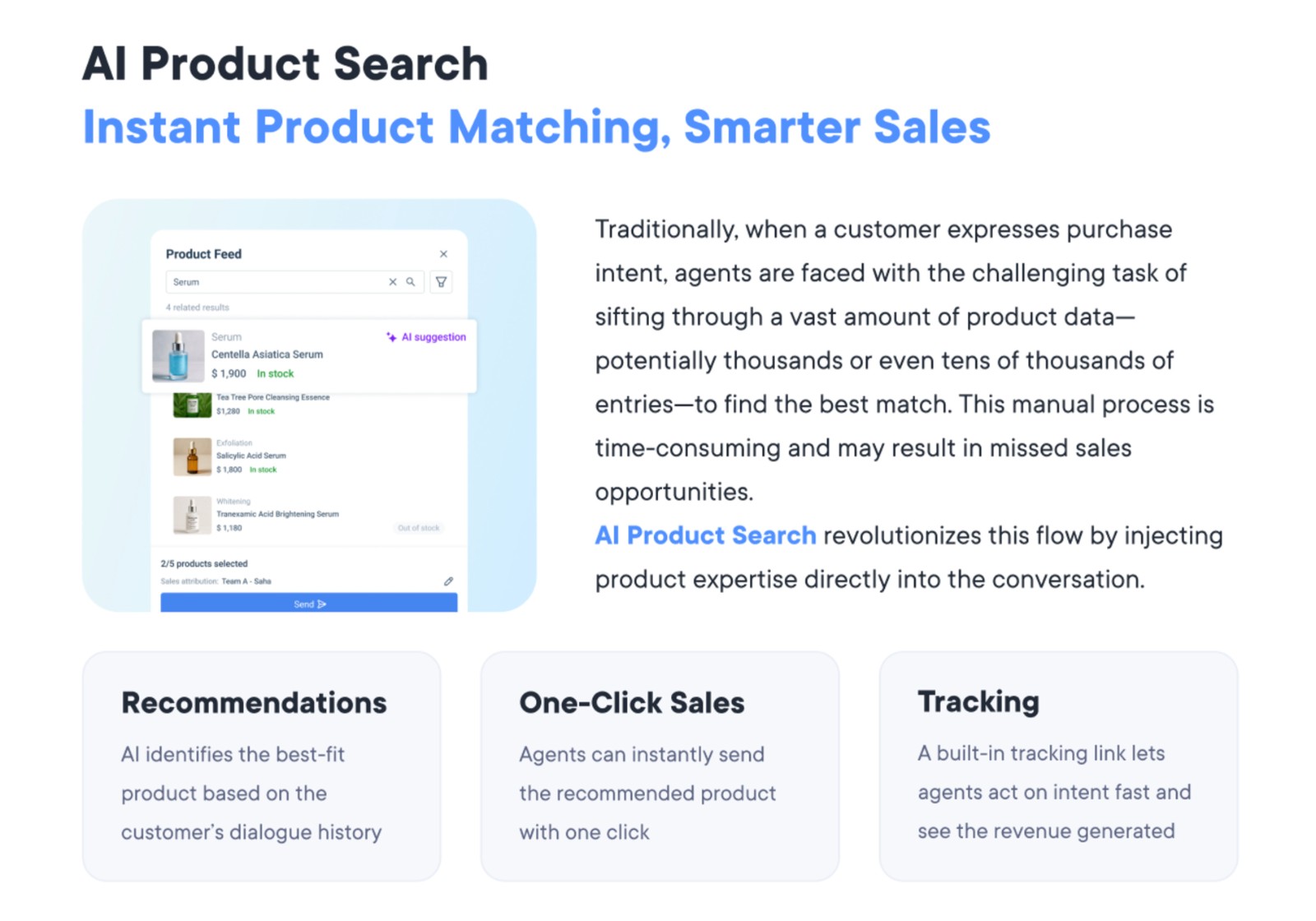
Through CAAC Product Feed, brands import a product catalog and the AI recognizes buying intent mid-conversation, surfacing relevant products directly in the chat — no separate recommendation engine needed.
3. The most flexible team management on the market
Beyond assigning messages to individuals, CAAC can auto-route keyword-tagged messages to specific teams on a round-robin basis — critical for multi-brand or multi-outlet operations, and a gap in most general-purpose tools. Multi-tier permissions and clean handover when staff leave are built in.
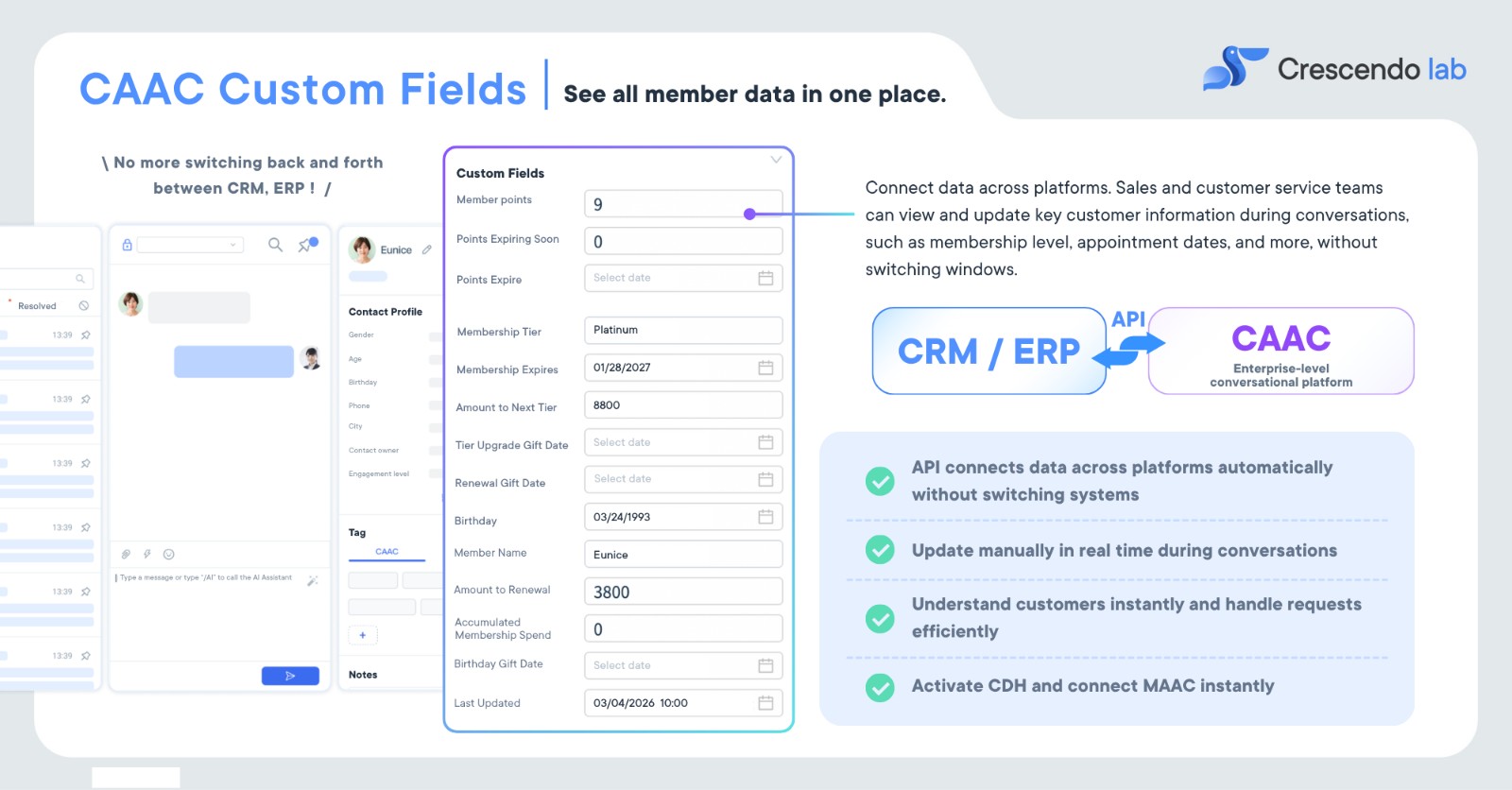
4. Custom fields that turn static customer data into a working record
Customer information isn't locked in a static profile — it's editable, searchable, and usable directly in sales or marketing follow-up, which front-line service teams tend to rely on daily.
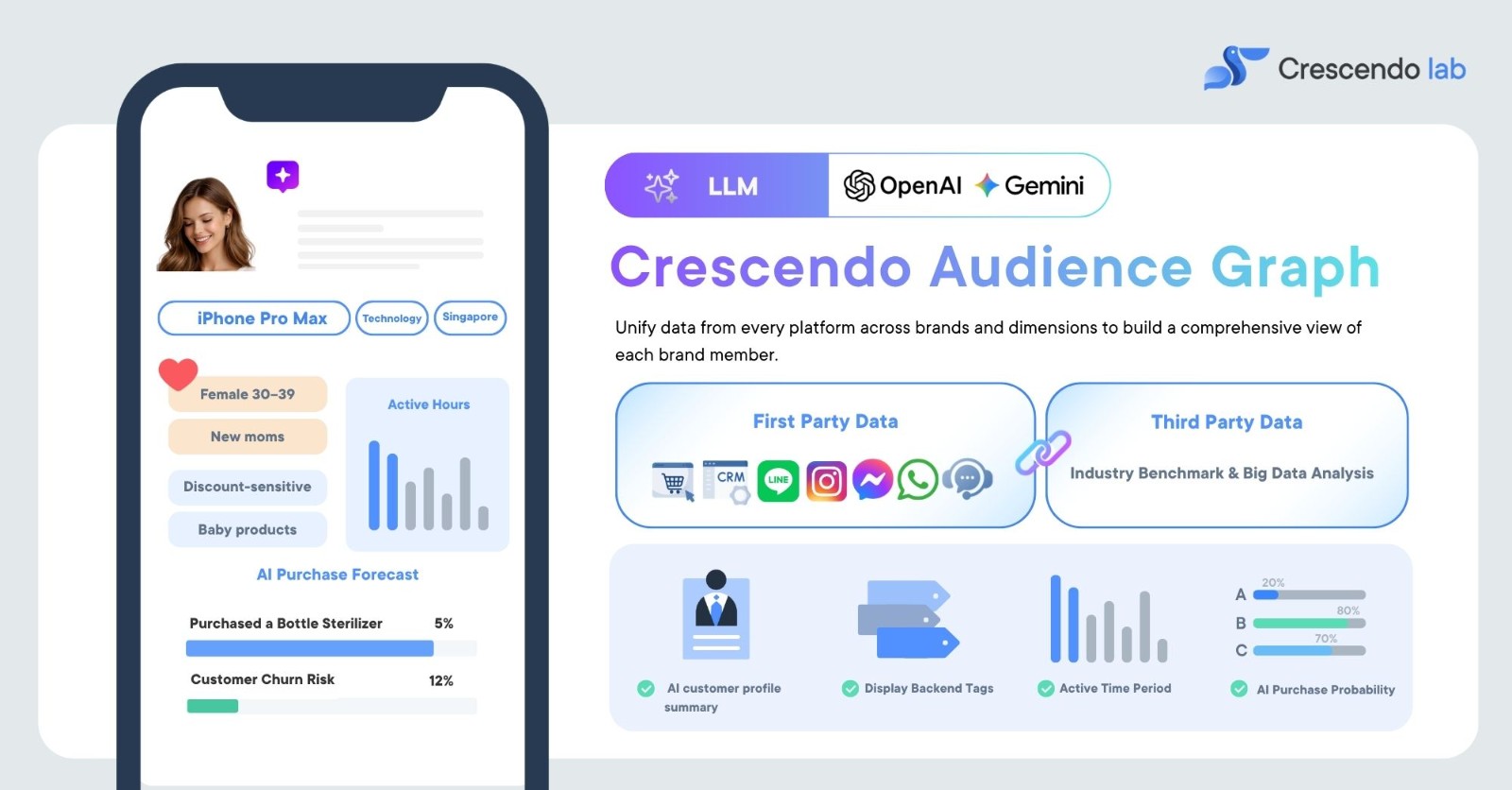
5. Marketing–sales–service data unity (Customer 360)
CAAC shares customer tags and first-party data with Crescendo's marketing platform (MAAC), giving service reps a full customer profile while replying, and supporting sales attribution at the conversation level. This is the structural advantage that's hardest for competitors to replicate.
6. Native voice, not a bolt-on
One-click VoIP calling with real-time video, automatic recording, transcript, and AI summary within 5–10 minutes of a call ending — voice as an analyzable asset, not a dead-end channel.
7. A genuine free-to-enterprise spectrum
From a solo site starting free on CAAC Go to a multi-outlet enterprise deployment, on the same underlying engine, with no migration required to scale up.
Ready to see how this fits your setup?
Choosing a conversational AI platform in 2026 comes down to three things the marketing copy rarely answers: which channels it genuinely covers including voice, whether it unifies marketing, sales and service data, and what it resolves on real conversations rather than in a demo. Run the 7 criteria above against every vendor on your shortlist.
If you want the wider strategic picture first, our free AI business communication eBook maps out how omnichannel teams are sequencing this shift.
Wherever your business is right now, there's a starting point:
- Small site, solo team, local service business → [Start CAAC Go free] — paste your site link, live today.
- Mid-to-large brand needing omnichannel and unified data → [Talk to a Crescendo Lab consultant] for a recommendation based on your setup.

Ainee S.
Thai Content Marketer at Crescendo Lab (-: